Reading is humanity's premier information transfer
Here’s why reading changed my life.
Reading is like
- inventing a mind-reading device,
- inventing a time-machine,
- getting on said time-machine and going back to 170 CE,
- using the mind-reading device to know exactly what Marcus Aurelius thought as he fought a war and lost eight of his children.
- realizing that his thoughts about loss, duty, and mortality are identical to yours and that human nature hasn’t changed in 2,000 years.
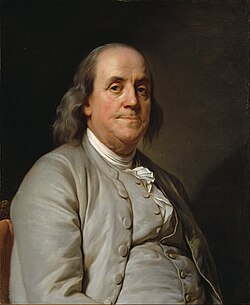
Ben Franklin, founder of the first subscription library in America, wrote that his library “made the common tradesmen and farmers as intelligent as most gentlemen from other countries.”
Reading isn’t just to make you “smart” though.
There are currently only two ways that direct information can be transmitted between humans—(1) speech and (2) written text.
Speech is great—it’s instant. But it has limitations in speed, accuracy, and is limited to your time and geography. People can and will misquote you—it happens all the time.
It’s like playing the telephone game. If each person in the chain of knowledge omits or misrepresents 10% of the information (due to personal bias, misinformation, disinformation), by the time you reach the 5th person, you’ve only got 59% of the information left. Plus, In my experience, it’s usually a lot more than 10% of the information that is cut out.
Written text can’t be misrepresented unless it’s quoted externally. It takes a lot longer to write and a lot longer to consume in its entirety. Once it’s written though, people thousands of miles away or thousands of years ahead of you can still consume it.
We live in a society built by our ancestors over hundreds of years. The founding fathers of the United States built in checks and balances because they studied the fall of every republic in history. When we don’t read why they did that—when we don’t go to the original source—we see it as inefficient bureaucracy and try to streamline it. Then we’re surprised when power consolidates and we end up with the same tyranny they were trying to prevent.
When people lose the ability to read the full text—the fine print, the terms and conditions—history, autobiographies—fiction—textbooks, self-help books—they get taken advantage of.
This is what happens when we don’t absorb knowledge from the original source, which is most often than not books. We misrepresent intentions and tear down solutions to problems we don’t realize exist. We reinvent the wheel instead of advancing. History repeats itself because we refused to read what was already written.
Books are the alternative to learning the hard way.
The only reason we’ve somewhat been fine is because of speech. This is what parents and teachers are essentially for, to pass on information that their parents and teachers told them. Only problem is you play the telephone game again.
How to read so it helps you
People seem to think that you have to pick up a single book and only read that until it’s finished. This is rarely how I read. I have a decent attention span, but I can’t stick with a single book. I have to flip through books with multiple different topics.
For me, it has to fit my frame of mind. For instance, there’s a book I read in the morning. There’s a book I read in the night. There’s a book I read when I have a great attention span, there’s a book I read when I want to feel motivated.
I also drop books very easily if a book is not interesting me, although I give it a chapter or two. I just close it and that gives me the freedom to pick a better book that is a better use of my time.
I’ve read a lot of great books throughout my life. I’d love to list all of them, but I’d love to give you the serendipity of finding a great book yourself. I’m going to list some of my favorites down here, and will keep updating it with more.
Get my latest writing and thoughts delivered to your inbox.