TikTok and ChatGPT made us all sound the same (and what to do about it)
The undesired effect of large language models, their training data, and media, which is further becoming short-form, is that it homogenizes thought.
You may realize this through written work produced after the year 2023. Articles largely sound as though they were written by the same author, although the content itself may differ.
More dramatic to me though, is the way that people think and speak.
Orwell called it “groupthink”—a phenomenon characterized by suppression of dissent, illusion of unanimity, self-censorship, and overconfidence in group decisions.
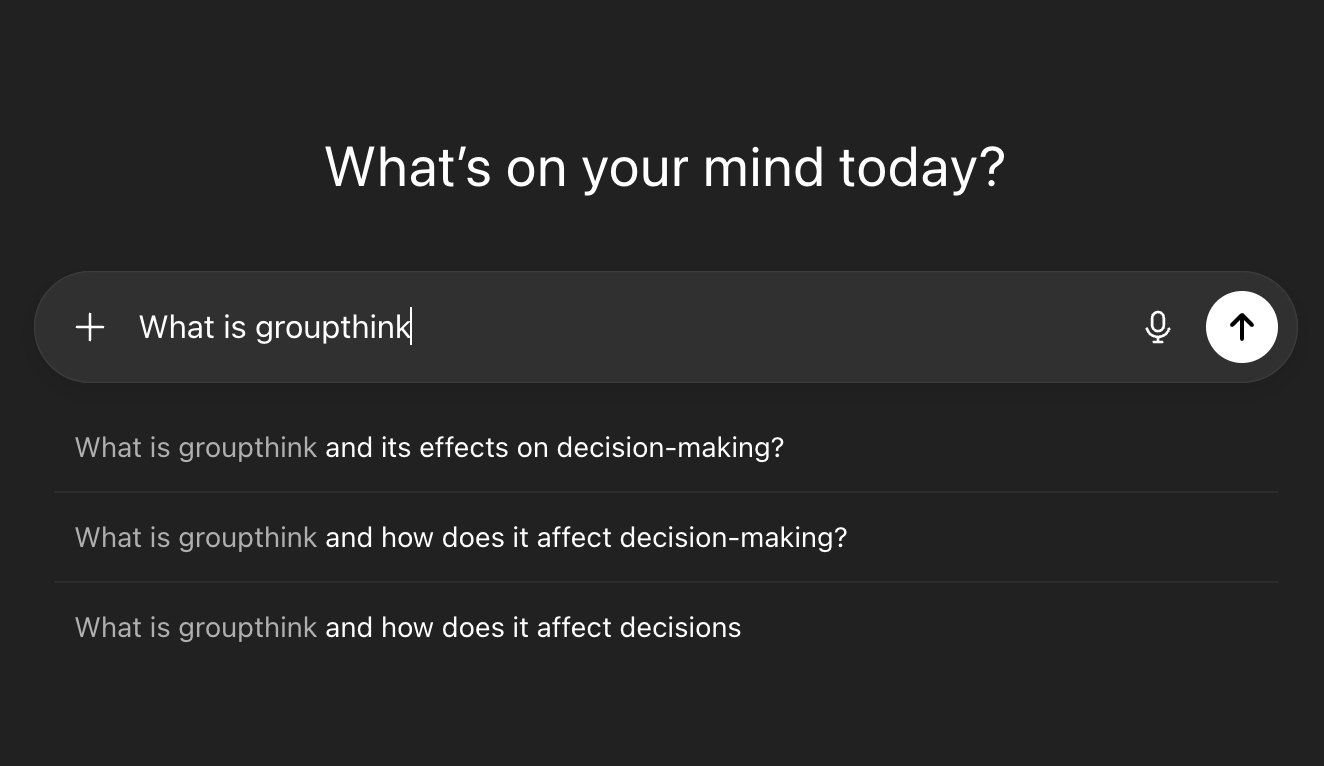
LLMs and short-form content exacerbate groupthink. As people rely on AI to think, or consume AI-generated content, they subconsciously absorb the reasoning patterns built into its training data. The reality is that training data kills the fringes of thought, a.k.a the most original ideas and focuses on mass media. How do the MAJORITY of people speak, construct sentences, and what would MOST people think is sound advice?
It is a self-fulfilling prophecy. Something that may have been partly sound (early LLMs) gets copied over into an artifact on the internet, or into someone’s brain. Then the next-gen LLM picks up on that and incorporates it into its training data.
By this time, the public is more used to the sound and feel of AI-generated content, and we forget what original writing or thought looked like. It is an artificial cognitive monoculture—where LLMs train on the most statistically common ways humans express ideas and think, then reinforce those patterns at a massive scale.
LLMs don’t produce shitty writing. But neither do they produce excellent writing. The middle (the average) is all that remains. And the thought of that is scary.
The middle could also be represented as the realm of acceptability, or canon. Language that goes outside this range has an uncertain reception. Either you are lauded as a genius or condemned as a moron. Often both at the same time.
When you stop sounding like those around you, it can be a scary and lonely experience. Unexpected language—often the thoughts that are on the tip of your tongue are received with laughter, almost like it’s a joke and that you can’t be serious.
It takes a certain level of courage and resistance to groupthink to not only produce thoughts like that—aberrations—but also stand behind them in the face of the orthodoxy. In fact, algorithmic orthodoxy almost sounds like a term you’ll hear about 10 years down the line at school.
Let’s talk about short-form content. The incentives of short-form creators are many, but the most important one is attention.
There is no free lunch and there are no multi-billion dollar companies providing services like TikTok, Instagram and Facebook for free. The price is in fact more hefty than money—it is your time and, more specifically, your attention.
When you’re poor you give away your time, because that is all you have. However, once you’ve payed your dues to society you must earn it back and protect it like it’s all you got—because it IS all you’ve got.
Short-form content
Short-form rewards ideas that achieve rapid social validation. Something that people can double-tap on and move on without too much thought or reflection on what is X person going to think about me if they see that I liked this post.
Likes are a signal, not only to the creator that their post was good, but to other people in that “we found the same thing funny, I’m a part of your group.”
This isn’t necessarily bad, we are evolved to NEED that group validation. Short form just takes it to another scale and allows you to evade critical thought.
Complex, contrarian, genuinely novel thoughts require cognitive effort.
If they didn’t they wouldn’t be novel—somebody would’ve thought of it already.
Short form filters out the novel in favor of that which is immediately familiar and shareable.
Don’t get me wrong, short form also has weird videos or videos that make you question things. Absolutely. They are rare and don’t reach the level of critical thought to truly engage with the subject matter—because you can just scroll past and move on to the next thing.
This is not my attempt to demonize short-form content. My point is that long-term people play long-term games, with other long-term people.
The simple reason for that is that the long term allows for compound interest. I’m not just talking about money. Knowledge, skills, health, everything short-term has a long-term.
Short-form content feels so good because it is like starting something new so many times over and over. Starting something new feels so great. Buying and selling shares daily, starting a new project, making the first coffee of the morning feels amazing.
Keeping at things doesn’t feel as great. As cliche as it is, to keep at something and not give up—to get past the low of the dopamine where it doesn’t feel so amazing or look so cool anymore—the discipline to do it despite other activities begging for your attention is what, in my opinion, brings “success” and long-term happiness.Think about compound interest for relationships, money, and skills.
Persevere past the point where it feels new and exciting. That takes a completely different hormone—noradrenaline (stress) and serotonin (patience, delayed gratification).
Challenging the orthodoxy and challenging cognitive homogenization requires this type of persistence that doesn’t provide immediate social validation or algorithmic amplification.
What’s cool now probably won’t be cool in five years. Stay ahead of the pack and the universe will reward you for paving the way forward.
More essays
Get my latest writing and thoughts delivered to your inbox.